Duke Health Referring Physicians

Article

Minimally Invasive Procedure Offers Relief for Chronic Lower Back Pain

Restorative neuromodulation device strengthens multifidus

Image
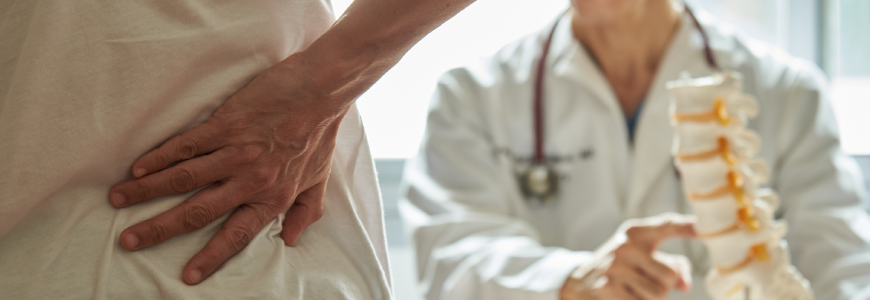
White man at kitchen sink with lower back pain

Lower back pain is one of the most common patient complaints. A new minimally invasive procedure at Duke Health promises relief to some patients. When the spine’s multifidus muscle atrophies, the resulting instability compounds lower back tightness and pain. The multifidus can be difficult to activate through physical therapy, but a restorative neuromodulation technique can stimulate the muscle to rebuild strength.

“We’ve used electronic stimulation in spinal care to modulate pain for quite some time,” says orthopaedic surgeon Peter G. Passias, MD, associate chief of the Duke Spine Division. “This is a relatively new procedure that’s novel in that it directly stimulates the muscle. We’ve found some regeneration correlatives of clinical improvements in pain and function.”

For patients with chronic low back pain who have failed conservative, noninvasive management, consider referral for evaluation. “I would advocate for patients to be evaluated at our Spine Center,” Passias says. “We have robust evaluation processes with the means and expertise to care for all types of back pain.”

Multifidus stimulation

If patients experience continuing lower back pain without a clear neurological or orthopaedic etiology, an MRI can help diagnose multifidus atrophy in the lumbar region. A same-day, minimally invasive procedure places a small controller in the pelvis with leads running to segments of the multifidus.

After the minimal recovery, the leads are programmed to stimulate the multifidus to contract and relax, strengthening the muscle over time. Rather than neuromodulation to override pain perception, the restorative technique helps rebuild the muscles that support the spine.

“To the patient, it can feel like exercising the lumbar area. They continue the regimen at home and typically see relief in three to six months,” Passias says. “Our studies have shown symptomatic and functional improvement, and five-year follow-up has seen steady improvement.”

Spine care at Duke

The procedure is performed by Passias, orthopaedic surgeon Joe T. Minchew, MD, and neurosurgeon Nandan Lad, MD, PhD. It is offered at all Duke hospitals in the Triangle and is projected to be performed at Duke ambulatory surgical centers in the future.

“We pride ourselves on treating not only everyday conditions but ones that escalate to more complex levels of care,” says Passias. “Simple problems can become complex if not treated appropriately initially.”

Passias emphasizes that the support of the full system across all disciplines is key to patient outcomes. “Many people are involved in the process of undergoing surgery and recovery, from skilled providers in radiology, anesthesia, nursing, ICU, floor care, and postoperative rehabilitation. A center like Duke can coordinate care and offer expertise at all levels.”

Article

Duke Orthopaedics’ Artificial Intelligence Efforts Improve Treatment, Access

Applications improve diagnostic accuracy and care coordination

Image
Doctor check and diagnose the human spine on blurred background

Duke Orthopaedics is using artificial intelligence (AI) to improve patient care from expedited referrals to ambient transcription to treatment suggestions. Orthopaedic trauma surgeon Christian A. Péan, MD, MS, serves as the executive director of AI and information technology innovation for Duke Orthopaedic Surgery. “As artificial intelligence is being used increasingly, we want to make sure that we’re using it in a way that prioritizes access and excellence first and foremost,” Péan says.

The university’s long history of research into AI and machine learning makes Duke Health uniquely suited to developing and using AI solutions. “We have a raft of expertise and experience in developing these systems,” says Duke Health orthopaedic spine surgeon Brett Rocos, MD. “With the cases we see, we can feed these models a wide range of information, making it incredibly clever.”

Refer a Patient

Learn how to refer a patient to Duke Orthopaedics.

Improved care coordination through referrals and access

The department is using AI to help expedite referrals and increase access. “We are really committed to expanding our digital front door,” says Péan. “We’re collaborating closely with care organization partners to use AI to more rapidly schedule patients, in order to help us document and find patients the right specialists at the right time.” He adds that AI also helps Duke providers communicate with referring physicians quickly and clearly.

“We encourage any and all providers to send patients to Duke,” Rocos adds. “No problem is too big or too small for Duke.”

AI assistance in the OR

Although implementation is still in the early stages, Rocos notes that the department is already using AI to assist decision making: “AI doesn’t replace the surgeon, but it can aid in surgical decision making. It’s like GPS in a car: the surgeon is still driving and choosing if these directions are the correct decision.”

This assistance helps while planning and performing surgery. “In spine, we’re using AI capabilities to make real-time decisions,” Rocos explains. “These systems can evaluate patients then and there while they’re asleep in front of us. AI systems use precise measurements to tell us when we’ve done enough to correct the patient’s spine. We can get the results we want without additional risk.”

Rocos reports improved outcomes and reduced procedure times among the benefits. “We’ve been able to do less surgery to reach the same goals, leading to shorter recoveries and shorter stays.”

Safeguards vital to implementation

Both physicians agree that governance and safeguards are vital to implementing AI in a clinical setting. “It’s still humans touching the patient and making the ethical decisions,” Rocos says. “We want to keep that human connection.”

Péan agrees that humans still need to take the lead: “I like to say that with AI, you don’t really ‘trust but verify.’ You verify and then trust, and only in that order.”

As AI is used across the medical field, Péan concludes, “[All physicians] have to be careful to balance our enthusiasm for using it to improve patient care with really thoughtful guardrails to make sure that we’re using it safely and responsibly. You need to have a really firm governance structure in place to vet any of these tools that we’re using, and we’re certainly doing that at Duke.”

Article

Endoscopic Spine Surgery Improves Recovery Time

Minimally invasive procedures get patients on their feet faster

Image
pain in the spine, pain in the back, highlighted in red, x-ray view. 3d illustration

Duke Health continues to advance spine surgery with minimally invasive procedures, including robotic, tubular, and endoscopic approaches. Endoscopic surgery, which can be performed as an outpatient procedure, in particular helps patients return to the activities of daily life faster, according to spine neurosurgeon David Huie, MD, MS. “With lower postoperative pain and quicker ambulation, patients can get up and get back to their lives faster. The recovery process doesn’t take as long,” he says.

Endoscopic spine surgery uses small incisions of about 1 cm to insert a camera and instruments into the spine. The procedure is most commonly used for decompression procedures with conditions including herniated discs, pinched nerves, and spinal stenosis, but indications for endoscopic procedures are always expanding. Endoscopy is also used for awake spine surgery by Duke neurosurgeons including spine surgeon Muhammad M. Abd-El-Barr, MD, PhD.

Advances in endoscopic approaches

Duke Health’s spine neurosurgery team uses cutting-edge approaches to minimize patients’ pain and maximize surgical effectiveness. The team is also looking at new ways to use endoscopic surgery. “The techniques and surgical indications are growing,” says Huie. “Within endoscopic, one part has been performing less invasive versions of the surgeries we’ve already been doing, while another is utilizing the endoscope to perform operations that we were previously unable to do. The small size of the endoscope allows us to access areas of the spine that were previously more difficult or impossible to get to.”

Some aspects of surgery are currently considered too large for endoscopy. Procedures involving large portions of the back would take prohibitively long with present endoscopic techniques, but Huie anticipates a future where parts of those procedures could be done endoscopically. “Addressing problems such as deformity and oncology are some of the next things the field is working on,” says Huie.

Endoscopic spine surgery at Duke

Endoscopic spine surgery is only offered at a few advanced centers in the country. The expertise required to perform the surgery takes years of training, but Duke Health has multiple experienced endoscopic spine surgeons.

The decision to refer can be difficult. MRIs frequently aid surgeons in making a diagnosis, and Duke Health’s physicians are willing to consult with providers considering referral. “If there are any concerning imaging findings or symptoms, we’re happy to help,” says Huie. “We can look at imaging and determine whether they should see a nonsurgical provider first.”

Article

Chiropractic Providers Connect Patients to Comprehensive Spine Care

Growing team increases access to full range of spine treatments

Image
Doctor physiotherapist doing healing treatment on man's back

Duke Health is expanding chiropractic care for patients with more access and more providers, offering a wide breadth of expertise from traditional chiropractic treatments to cutting-edge therapies. Seeing a chiropractor within the Duke system also enables patients to receive more advanced care or participate in clinical trials if necessary, says Duke chiropractor Justin Goehl, DC, MS.

“Our team has over 40 years of hospital- and multi-specialty experience,” says Goehl. “We’re all delivering quality of care that follows recommended guidelines. We’re dedicated to getting the patient to the right provider at the right time, whether that’s us, physical therapy, surgery, or another specialty.”

“Spine-related pain impacts patients’ quality of life,” says spine surgeon Christopher I. Shaffrey, MD, chief of the Duke Spine Division. “For a lot of people, chiropractic medicine makes them feel better quickly, and, as physicians, chiropractors can recognize if there’s something more serious going on that may require additional treatment.”

Conservative care and the full range of treatment

Current guidelines for spine-based conditions recommend conservative care as a first-line treatment before escalating to advanced imaging or surgery. This helps to reduce unnecessary or invasive procedures, as well as the likelihood of progression to chronic lower back pain. Treatment options include:

  • Spinal mobilization/manipulation
  • Myofascial release therapy
  • Use of passive modalities and therapies
  • Mechanical diagnosis and treatment
  • Exercise guidance and home care suggestions

Although some think chiropractic treatment is a lifetime commitment, Goehl says the goal is to improve patients’ quality of life, reduce repeat injuries, and discharge them as soon as appropriate.

Shaffrey and Goehl agree that seeing a chiropractor can help patients with not only quality of life but also identifying conditions that may need more aggressive treatment. “We’re trained to evaluate all spine-related conditions and determine what treatment is appropriate,” says Goehl. “If someone comes in with a red flag for a surgically treated condition, we can identify that and help them get the appropriate care.”

Chiropractic Providers

Duke chiropractic providers see patients at multiple locations in Durham and Wake counties. Patients can self-schedule directly on DukeHealth.org.

Integrated spine care

Seeing chiropractors embedded within a larger hospital system offers patients significant benefits. “Providers can send patients to Duke with any spine-related complaint, and we’ll evaluate them and help identify the best avenue for their condition across multiple modalities, whether that’s chiropractic or another therapy,” says Goehl. Duke chiropractors also have access to all of the patient’s electronic health record, reducing the need for unnecessary testing or redundant imaging.

Duke’s comprehensive spine health program reduces uncertainty for referring providers. “If you’re not sure what conservative care option is right for a patient, we have a decision tree,” says Goehl. “We can evaluate the patient and help determine their needs. We’re here to help.”

Sacroiliac Joint Pain: The Role of Minimally Invasive Robotic Surgery

Sacroiliac joint pain is common, accounting for 10% to 38% of cases of chronic low back pain. In this educational activity, learn about the diagnosis and management of patients with sacroiliac pain, including when to consider minimally invasive robotic surgery. This educational initiative highlights the diagnosis and management of patients with sacroiliac joint pain, including the role of minimally invasive robotic surgery in treatment.

Article

Duke Expands Cutting-Edge Spine Services

World-class research and new hires grow the division

Image
Male orthopedist examining patient's back in clinic

Duke Health is growing its spine services through innovative research and adding new providers. “We want to be the leading comprehensive spine group in the Southeast and one of the leading groups in the country,” says spine surgeon Christopher I. Shaffrey, MD, chief of the Duke Spine Division, which combines the expertise of the departments of neurosurgery and orthopaedic surgery at Duke.

The new physicians complement the spine division’s breadth and depth with several experienced and well-known surgeons. “We’ve brought in people to facilitate engagement, access, and the ability to address simple to complex conditions across the Duke spectrum,” says Shaffrey.

Image
Christopher I. Shaffrey, MD
The goal is to have any patient with any condition in the U.S. referable to Duke to have outstanding, cutting-edge treatment.
Christopher I. Shaffrey, MD
New clinicians at Duke Spine

Enhancing and expanding offerings

The world’s second spine navigation unit recently came to Duke to improve instrumentation accuracy in endoscopic spine surgery. Spine tumor treatment, oncology, and osteofragility fractures are also leading areas of research. “Our surgeons are helping develop the latest and best treatments and technologies,” says Shaffrey.

The experienced physicians joining the staff add to treatments for complex spinal conditions, including awake spine surgery, severe scoliosis surgery, spine revision surgery, and chiropractic options. The new hires also increase access for patients, with more appointments in more locations throughout Durham and Wake counties.

The Duke Spine treatment path

Patients coming to Duke Spine don’t always start with surgery. “It’s very important that we engage people and look for the simplest treatment to take care of a substantial number of symptoms,” says Shaffrey. “This can help with optimization and insurance approvals, but more importantly, it gets patients healthier for surgery if it’s required.”

In this effort, the Duke Spine Health Program is adding more chiropractors and other nonoperative options for care. “Spine-related pain impacts patients’ quality of life,” Shaffrey says. “For a lot of people, chiropractic medicine makes them feel better quickly, and, as physicians, chiropractors can recognize if there’s something more serious going on, requiring additional treatment.

“Duke has been very forward thinking in bringing this group of capabilities together. The goal is to have any patient with any condition in the U.S. referable to Duke to have outstanding, cutting-edge treatment.”

Quick Case Study

Scoliosis Patient Becomes First in U.S. for Innovative Device

Non-magnetic innovation offers less invasive follow-ups

Image
Doctor examines the back of a 5-year-old boy who has back pain
Image
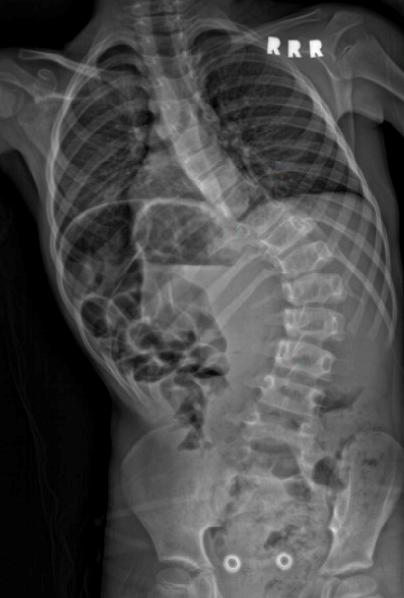
Early onset scoliosis patient spine radiograph before surgery
Radiograph of the patient before surgery showing early-onset scoliosis

When an 8-year-old boy was diagnosed with early-onset scoliosis (EOS) due to a spinal cord tumor, he was left with few options to control his deformity while allowing continued growth, in addition to required tumor surveillance. With a 70-degree curvature of his spine, any more progression could impact his heart and lung development as well as his spine growth. After bracing and casting failed to sufficiently control the patient’s deformity, Duke pediatric spine surgeon Anthony A. Catanzano Jr., MD, knew they would need a different solution.

Left untreated, EOS can have severe cardiopulmonary ramifications. At younger ages, it’s critical to use implants that will grow with the patient rather than fusing the spine and limiting their growth and development. “Growing rods constituted a major innovation for EOS treatment,” Catanzano says. “They allow us to correct the deformity while maintaining the capacity for the child to grow and develop during this critical period.”

When they were introduced a decade ago, magnetically activated growing rods improved scoliosis treatment, allowing for rods to be lengthened without the typical invasive surgery to do so. However, these rods do pose some risks such as metal debris during lengthening, leading to metallosis and increased blood levels of metal ions. Additionally, the magnets were limited in their maximum length and strength to counteract the spine’s curvature and growth. For this patient, the magnets would interfere in MRIs, which are critical in the care of his spinal cord tumor.

What innovation did Catanzano use to treat EOS? 

Image
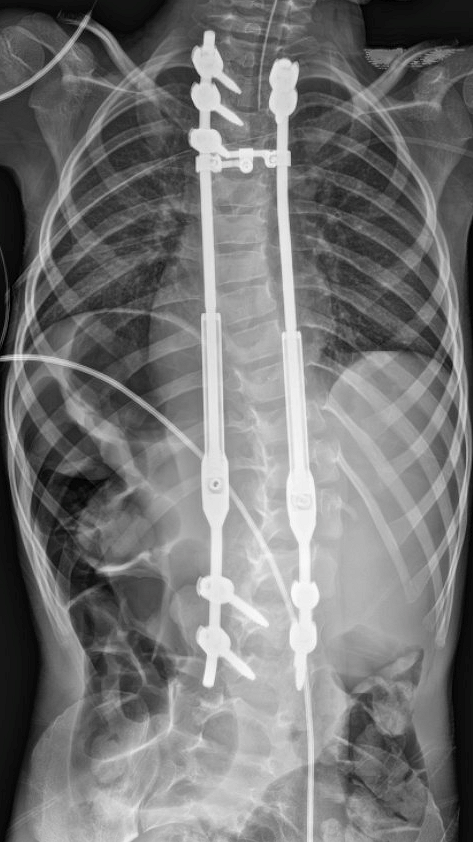
Early-onset scoliosis patient spine radiograph after surgery showing MARVEL nonmagnetic growing rods
Radiograph of the patient after surgery with MARVEL growing rods

After reviewing various options, the patient became the first in the U.S. to receive an innovative implant, the MARVEL growing rod system (Globus Medical, Audubon, PA). Rather than a magnetic driver, MARVEL uses a mechanical lengthening technique with the simple insertion of a driver into a specific portion of the rod. “We make a small incision every six months to lengthen the rod, aiming to match the patient’s growth during that time,” Catanzano says. This incision and lengthening can be done without the need for a complete operating room set-up typical in spine surgeries. 

The MARVEL growing rods enable a quick recovery from the initial surgery. “We operated on a Friday, and the patient was home by Sunday morning, bouncing around the house and enjoying being taller,” says Catanzano. “He no longer needs a restrictive external cast or brace.”

After six months, the patient returned for his first rod lengthening, which successfully achieved the intended lengthening goal. Unlike magnetic rods’ external control device, the driver and rod’s direct connection reduces the chance of stall or failure during lengthening. The follow-up procedure took place on a Friday morning, and the patient was home by the afternoon, back to his favorite activities — video games.

“It’s important to note that scoliosis is not just a condition of adolescence,” Catanzano cautions referring providers. “Typically, providers begin to check at 10 or 11, but it should be on the radar much earlier. Using the Adams forward bend test and scoliometer at well-child checks for younger patients can help to catch scoliosis earlier.”

Early detection and referral to a medical center with the full range of treatment options are key to improving scoliosis outcomes. With innovations like these growing rods, Duke stands on the cutting edge of scoliosis treatment. Duke was the first program in North Carolina to offer the EOS low-radiation-dose imaging system (EOS imaging, Paris), and now has four machines at Duke locations in Durham and Wake counties. For children who need repeat imaging as with scoliosis, these lower-dose exams use biplanar radiographs and functional 3D data. “At Duke, our multidisciplinary teams are really committed to treating EOS and other concomitant conditions,” says Catanzano.

Quick Case Study

Intractable Leg Pain and History of Surgical Complications Lead to 91-year-old’s Awake Spine Surgery

A 91-year-old woman presented with bilateral leg pain that developed after an L5 kyphoplasty for an L5 compression fracture performed at another institution. To accomplish the kyphoplasty at the other institution, the patient was intubated. Her advanced age and a host of pre-existing comorbidities including coronary artery disease, hypertension, congestive heart failure, and pulmonary hypertension led to post-operative challenges after her initial procedure, including an extended intubation time. 

Computed tomography (CT) showed that the cement used in the kyphoplasty had moved into the spinal canal, compressing the nerve roots and leading to her intractable leg pain. She tried neuropathic pain medications and steroids, but the leg pain was unrelenting.

While laminectomy could resolve the pain, her original surgeon worried about the strain of another surgery on her body. This led the patient to search for a surgical solution that would be less invasive in every way.

Question: Could Duke Health surgeons surgically address this patient’s pain without exposing her to the risks of another surgery under general anesthesia?

Answer: In close coordination with anesthesiologist W. Michael Bullock, MD, PhD, neurosurgeon Muhammad Abd-El-Barr, MD, PhD, performed a minimally invasive laminectomy under regional anesthesia—called “awake spine surgery.” The procedure alleviated the nerve compression caused by the cement while the patient received carefully calibrated regional anesthesia instead of intubated general sedation.

In addition to reporting only minimal discomfort immediately after surgery, the patient was back on her feet and discharged home less than 24 hours later.

This patient’s age, comorbidities, and previous anesthetic history ruled out a procedure under general anesthesia, which led her to explore the option of undergoing surgery with regional anesthesia instead. While the awake procedure was appropriate for her based on her medical profile, Abd-El-Barr and Bullock believe that awake spine surgery may be beneficial for more people with a variety of medically relevant circumstances.

“This approach to surgery opens the door to more patients who need it, both people who can’t have sedated surgery and even those who can,” says Abd-El-Barr.

Based on data from close to 100 awake spine surgery procedures at Duke Health, the doctors say that most patients who undergo this type of procedure use on average 50% fewer opioids to control pain after surgery. Most also spend significantly less time in the hospital after their procedure.

“By coming together we’re able to minimize the surgical footprint,” Abd-El-Barr adds. “The right candidates for awake spine surgery will do well under regional anesthesia with minimal sedation and have a condition that can be approached minimally invasively to reduce blood loss and tissue trauma.”

“We seek to optimize a patient’s whole perioperative period, beginning with preoperative clinic visits, through surgery, and into recovery,” says Bullock. “To do that takes the full team’s attention -- doctors, nurses and staff from both surgery and anesthesia as well as the patient themselves. The team approach allows us to develop a plan that will help patients recover more quickly by reducing the surgical and medical footprint that may keep them in the hospital longer or lead to detrimental outcomes.”

Bullock also notes that many people are afraid when they hear the term “awake,” but makes it clear that awake can mean different things. At Duke Health, this ranges from truly awake procedures to less intensive sedation options that help “take the edge off” and allow the patient to relax if they have anxiety about staying fully awake.

Duke Health has performed close to 100 awake spine surgeries to date. Today the team performs three to four of these procedures each week. The results for patients such as the one in this case study speak for themselves—she is now one year post operative and continues to be free of bilateral leg pain without the need for narcotics.

For information on how to refer a patient, visit Refer to Duke.

Quick Case Study

Revision Spine Surgery Restores Mobility After Multiple Spine Surgeries

Challenging procedure takes patient from wheelchair to fishing boat

Image
A doctor explaining lumbar anatomy to back pain patient

After a series of spine surgeries left a 69-year-old man reliant on a wheelchair or cane, multiple centers were unable to help his complex case: a partially fused spine with a forward/side-leaning stoop which also compressed nerves, causing sciatic leg pain. Additionally, a previous weight-loss surgery complicated his presentation. The patient was no longer able to enjoy time with his grandchildren, fish on his boat, or take a walk on the beach with his wife.

After consulting several other surgeons who could not help him, the patient came to Brett Rocos, MD, for revision spine surgery. “No amount of physical therapy or increasing muscle strength would have been enough to correct this patient’s spine,” Rocos says. “We’re the last line for patients like this. Either we do it or no one does.”

How did Rocos correct the patient’s previous surgeries?

In a nine-hour surgery, Rocos and the team began by removing previous devices from a lumbar fusion and a spinal cord stimulator. They then decompressed the spine and placed artificial bone grafts between the vertebrae. Using four cobalt rods and approximately 40 screws from T2 to the pelvis, the team pulled the patient’s spine straight. “We recreated normal spine anatomy as best we could,” says Rocos.

Rocos reports that the patient was able to stand the day after surgery. His healing was complicated by a serious infection, but Duke critical care and infectious disease teams coordinated with his previous weight-loss surgeon to provide high-quality care for a full recovery.

Rocos cites the coordinated care teams as critical to this patient’s success. “I’ve never been anywhere where we work so closely with our critical care teams,” Rocos says. “The attending relationships are superb.”

With hundreds of years of combined experience and internationally recognized experts within the faculty, Duke physicians have seen every shape and severity of spine deformity. Within the spine division and across the three hospital campuses of the Duke system, Rocos says the faculty has access to every technology in spine surgery: “Not just surgical and imaging technology but also perioperative tech, all backed by a huge support team behind the acute clinical care.”

With the help of these coordinated teams, the patient is now able to walk and move independently again. A year after his surgery, the patient has returned to the outdoor activities he previously enjoyed. His fishing catches have gone viral on social media.

“My work is very much this type of last resort,” says Rocos. “This patient’s journey reflects the path for these complicated cases. He epitomizes what I’m here to do.” Rocos will expand his work to include pediatric spine cases.

Refer a patient

For Orthopaedic Spine referrals, call 919-613-7797. 

For Neurosurgery Spine referrals, call 919-684-7777.