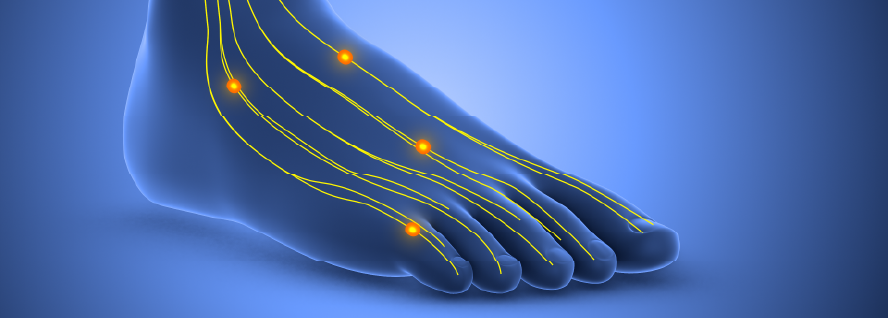
Diabetic peripheral neuropathy (DPN) affects about 20% of patients with diabetes, and approximately 50% of those patients are refractory to medical management. For many, neuromodulation therapy offers an effective treatment option, reducing neuropathic pain in up to 90% of patients within 24 months. Research led by Duke neurosurgeons, including Nandan Lad, MD, PhD, helped demonstrate this benefit and contributed to FDA approval of spinal cord stimulation for DPN in 2021.
“Neuromodulation for diabetic peripheral neuropathy can be very effective for many patients,” says Lad. “Neuropathy-related pain and numbness can further disrupt mood, mobility, and sleep. It’s important not only to reduce pain, but also to prevent limitations in activities of daily living and quality of life.”
Lad notes that neuromodulation has also been shown to be neurorestorative in about two-thirds of patients, improving sensation in the legs. “We’re not certain how microvascular circulation improves from a scientific perspective, but we’re excited to explore it through further research,” he says.
To refer a patient to Duke Neurosurgery for a neuromodulation consultation, call 919-668-2852.
How neuromodulation reduces pain
Neuromodulation using spinal cord stimulation (SCS) delivers mild electrical impulses to the spinal cord through a small implanted electrode, blocking pain signals before they reach the brain. Duke specialists use high-frequency stimulation at 10 kHz, which studies show provides sustained, long-term pain relief.
“We use high-frequency devices that are paresthesia-free,” says Lad. “The therapy acts on the dorsal horn and does not cause side effects such as tingling or buzzing.”
Patients first undergo a simple, minimally invasive one-week trial using a temporary external device. If the trial reduces pain by 50% or more, patients can move forward with permanent implantation. The permanent device is placed during a minimally invasive outpatient procedure in which leads are inserted into the epidural space and connected to an implantable pulse generator. After the incision is closed, patients use a handheld remote control to adjust the electrical impulses.
“The device requires minimal adjustment and monitoring,” says Lad. “It’s rechargeable through the skin, and the battery typically lasts about 10 years.”
Candidates for neuromodulation
Patients with diabetic peripheral neuropathy that has not responded adequately to two medications, or those who cannot tolerate medications, may be good candidates for neuromodulation. Patients must also have reasonably controlled A1C levels and a body mass index below 45.
“Some patients experience pain, while others describe symptoms such as burning, discomfort, numbness, or tingling,” says Lad. “It’s important to ask patients about their symptoms because presentations can vary widely.”
Patients must undergo an EMG nerve conduction study to determine the type of neuropathy, as well as a psychological evaluation, which can be completed via telehealth.


Early intervention is key
Earlier intervention can help patients manage pain sooner and may prevent some of the downstream effects of DPN, including reduced mobility, loss of sensation, and mood and sleep disturbances, says Lad.
“If patients are reporting symptoms of neuropathy and medication is not effective, refer them to us,” he says. “We work hard to evaluate patients quickly and are always available to consult on a case or discuss whether this may be an appropriate treatment option.”
As leaders in the field, Duke specialists will continue studying neuromodulation for DPN while expanding a dedicated program in this area.
“We have strong relationships with colleagues in podiatry, endocrinology, primary care, and other specialties,” says Lad. “We will continue to advance this treatment, help more patients access it, and study ways to further improve outcomes.”