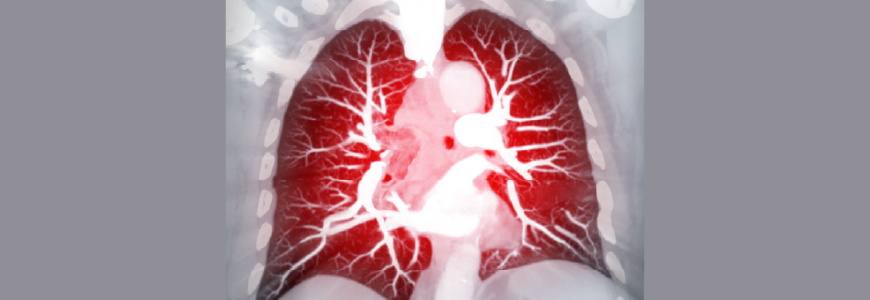
Key Takeaways
- Chronic thromboembolic pulmonary hypertension (CTEPH) is a potentially serious complication of pulmonary embolism that can develop even in patients who have received appropriate anticoagulation.
- Balloon pulmonary angioplasty (BPA), a minimally invasive, percutaneous procedure performed at advanced heart centers like Duke Heart & Vascular, is an effective treatment for selected patients with CTEPH.
- Interventional cardiologists with experience in complex coronary interventions and chronic total occlusions (CTO) offer an advantage for patients receiving BPA.
When a 37-year-old man with a history of pulmonary embolism (PE) presented with worsening hypoxia, shortness of breath, and dyspnea on exertion, it was clear that his PE had not fully resolved after taking blood-thinning medication. The patient was unable to walk across a room without resting despite multiple medications and three liters of supplemental oxygen.
When PE remain in the vessels, patients can develop chronic thromboembolic pulmonary hypertension (CTEPH). “In more advanced cases, this leads to heart failure,” says Duke Health interventional cardiologist Mariem Sawan, MD. “As a result, even very young patients can have worsening shortness of breath and poor exercise capacity, hindering them from living life fully.”
“This patient’s condition was very dramatic,” Sawan says. Advanced centers can treat CTEPH through balloon pulmonary angioplasty (BPA). However, one session of BPA at another center did not fully address the patient’s symptoms. The center began to work the patient up for transplant, but some of his treatment team thought there might be another option: Duke.
How did the Duke Heart & Vascular team treat this patient’s CTEPH?
The patient was referred to Duke Heart & Vascular to treat his CTEPH. “Each patient with CTEPH is discussed extensively at our multidisciplinary team of clinicians, surgeons, interventional cardiologists and radiologists to discuss in detail,” Sawan says.
The multidisciplinary team evaluated the patient and determined that BPA was the most appropriate treatment option. The minimally invasive, percutaneous procedure opens the pulmonary arteries by breaking up clots within the vessels. Few centers offer the treatment.
“Expertise in complex coronary interventions and CTOs [chronic total occlusion] brings a distinct technical advantage to BPA. My experience with advanced guidewire and catheter techniques allows me to navigate challenging vascular anatomy and cross complex occlusions to open lesions and restore blood flow,” Sawan explains.
The treatment may require multiple sessions. “If CTEPH involves all lobes of the lungs, as with this patient, it usually takes three to five sessions of BPA to treat all the affected pulmonary arteries,” Sawan says.
After his BPA sessions, the patient experienced remarkable improvement in his symptoms and quality of life. “His pressures went down dramatically,” Sawan reports. The patient no longer requires supplemental oxygen and reports that he has been able to return to the activities of daily living.
“Every patient who has CTEPH should be referred to a tertiary care center to ensure they’re on the right medications and have access to advanced treatment options, including surgery or BPA, depending on the distribution and severity of their disease,” Sawan says.