Key Takeaways
- A two-stage reconstruction surgery at Duke Health reconstructs a patient’s crushed hand, repairing multiple open fractures, segmental bone loss, and extensive soft tissue damage.
- Hand trauma, including degloving, crushing, and heavy machinery injuries, requires immediate same-day care by a hand surgeon.
- Duke Health Lake Norman Orthopaedics offers advanced care with fellowship-trained physicians.
At Lake Norman, Duke Health Orthopaedics brings the world-class care of Duke Orthopaedics to the greater Charlotte area with fellowship-trained physicians to provide complex care. Duke Health Lake Norman provides comprehensive orthopaedic and sports medicine care for patients with acute and chronic musculoskeletal conditions, sports-related concerns, and hand and upper extremity disorders, with a growing team of providers.
Duke Health Sports Medicine and Orthopaedics Mooresville Providers
- Graham W. Hall, MD, primary care sports medicine doctor
- Gregory Pereira, MD, hand and upper extremity orthopaedic surgeon
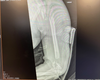
When a skid steer’s claw attachment caught a 26-year-old man’s hand while at work, he suffered significant trauma. With a large soft tissue degloving with gross contamination of dirt and leaves, open fractures of the third through fifth metacarpals and small finger proximal phalanx, and a missing head for the fifth metacarpal, the man needed urgent surgery to avoid amputation and preserve function.
“In addition to the degloving and open fractures, his extensor tendons were lacerated, and the distal ulnar digital nerve of the small finger was severed,” says Duke Orthopaedics hand surgeon Gregory Pereira, MD. “Every layer of the hand was injured: skin, tendon, nerve, and bone.”
In urgent surgery, the Duke Health Lake Norman team worked to irrigate, debride, and stabilize the open fractures and temporize the obvious bone loss. “The most significant challenge was the missing metacarpal head,” Pereira says. “With a fresh, contaminated wound to the soft tissue envelope, any bone graft would carry an exceedingly high risk of infection and failure.”
How did the Duke Health team repair this severe hand injury?
As part of the initial surgery, the Duke Orthopaedics team reduced and pinned the fractured metacarpals, repaired the extensor tendons and ulnar digital nerve, and worked to carefully handle and advance the soft tissues for coverage.
To address the missing metacarpal head, Pereira placed a bone cement spacer in the gap as the first stage of an induced-membrane (Masquelet) technique. As the body heals, it constructs a membrane around the spacer with osteogenic factors. In the second stage of surgery, six to eight weeks later, the spacer is replaced with a bone graft, and the membrane’s blood supply and osteogenic factors supports healing.
With the complete loss of the metacarpal head, the graft fuses the joint to give the patient a stable small finger. “Without a joint surface to rebuild, this is the best option to preserve function,” says Pereira. “Otherwise, his little finger would lack continuity through the prior joint and be completely unstable. The fusion restores stability which over time will help him functionally.”
Pereira notes that hand trauma, including degloving, crushing, and heavy machinery injuries, requires referral to a hand surgeon for same-day evaluation.
“Patients with emergent injuries should be seen by advanced specialists as soon as possible to preserve function and avoid infection and the possible need for undue amputation,” Pereira says. “Delaying care limits patients’ options.”