Refer a patient to Duke Transplant or learn more about kidney and pancreas transplant (PDF).
A study published in the American Journal of Transplantation establishes that a monthly dual costimulatory blockade infusion is an effective immunotherapy after kidney transplant for the first time in humans. Duke Health kidney/pancreas transplant surgeon Allan D. Kirk, MD, PhD, served as the senior author of the phase 2a pilot study.
“Current calcineurin immunosuppression drugs are nephrotoxic,” Kirk says. Side effects for current daily oral medication regimens include decreased kidney function, diabetes, hypertension, dyslipidemia, sexual dysfunction, and more. “It doesn’t make sense to treat a patient receiving a kidney transplant with a drug that damages the kidney,” Kirk adds.
With more than 50 years of experience, the Duke Kidney Transplant Program is a leader in research and clinical care, having performed over 5,000 procedures, including living donation, paired donor exchange, and complex cases. Early referral enables providers to offer more options and improves patient outcomes.
Study design and results
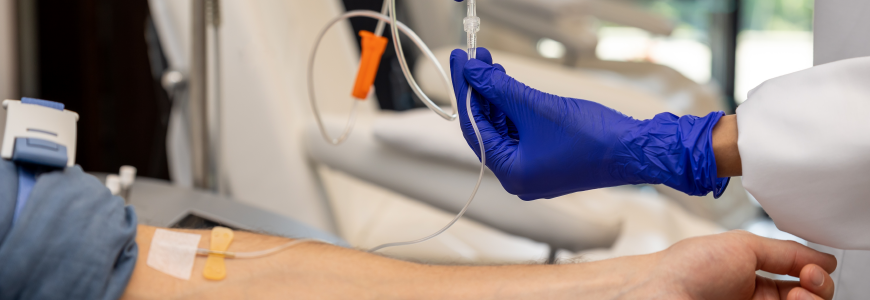
The study followed 23 patients in an open-label, single-arm design. All patients experienced increased kidney function post-transplant. After four weeks of standard oral therapy, patients transitioned to monthly infusions of biotherapeutic agents belatacept and dazodalibep for 48 weeks.
These agents target a different pathway than the current standard calcineurin treatment to reduce side effects. Research on costimulatory blockade immunotherapy started in the 1990s, but this is the first study to test the application in humans, with promising results.
While 10 patients had to withdraw throughout the course of the study, none experienced antibody-mitigated rejection. Two of the first three patients in the study experienced reversible rejection signs early on, but physicians were able to treat the patients and adjust the study protocol to improve response and safety. “While there seems to be a slight risk of early rejection, it’s reversible with careful monitoring,” says Kirk. “This shows proof of concept for episodic immunotherapy.”
Advantages of infusion treatment
Kirk says monthly infusions help ensure compliance. “No one else can tell if a patient skips their daily oral medication, but if they miss an infusion visit, the health system can help get them seen,” he says.
The treatment is also less toxic to the kidneys. Kirk estimates that 20 percent of patients lose kidney function because of calcineurin treatments in the years after a kidney transplant.
This small study validates the treatment’s potential for patients. A larger trial is anticipated to test continued efficacy and determine which patient populations benefit most from the treatment. “We hope most patients can be spared the toxic effects of immunosuppressants, which could be reserved for those with high-risk factors," Kirk concludes.