To refer a patient to the Duke Pituitary Program, call 919-684-7777 or log into MedLink.
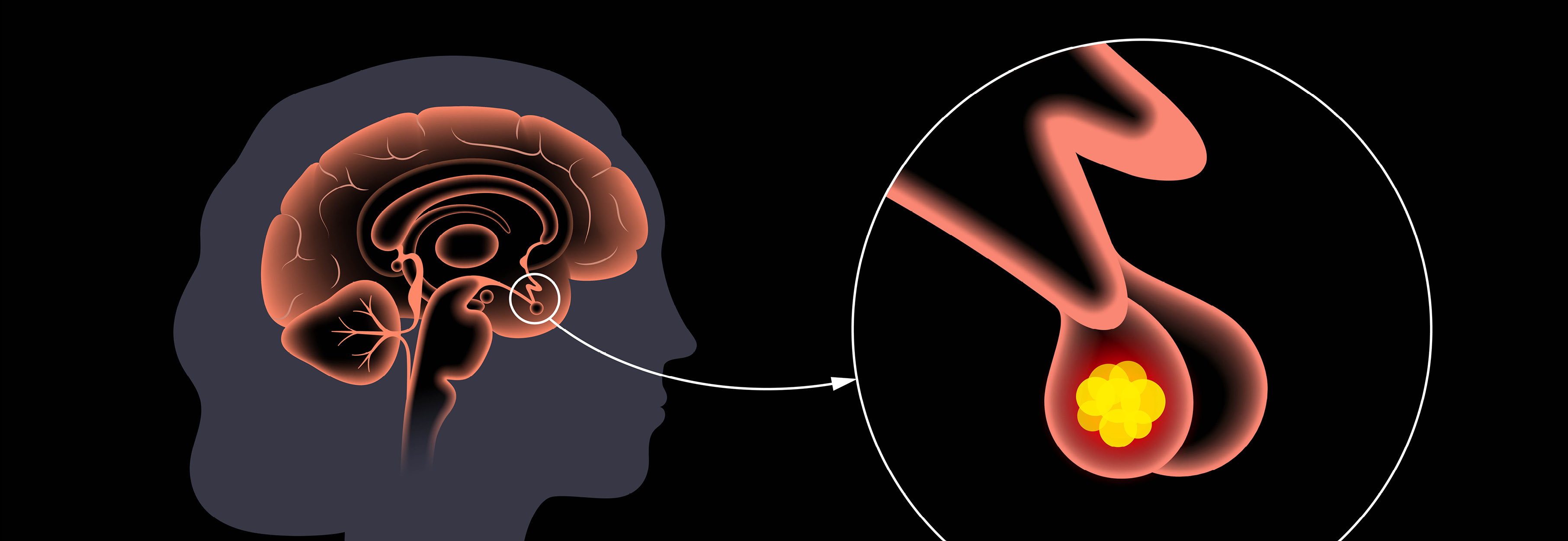
A 36-year-old female patient presented to Leena Shahla, MD, neuroendocrinologist at Duke Health, with two pituitary adenomas at the end of 2024. The first was a prolactinoma and was diagnosed in 2014. A second tumor was identified on imaging in 2017. The patient was taking dopamine agonist cabergoline to treat the prolactinoma, but developed multiple comorbid conditions over several years, including diabetes, osteoporosis, and anxiety.
This prompted Shahla to order a full workup to confirm if the second tumor was functioning, mainly causing Cushing’s. The patient underwent a dexamethasone suppression test and late-night saliva tests, which confirmed Cushing’s. The patient also had elevated insulin-like growth factor 1 (IGF-1), indicating that the prolactinoma was also secreting growth hormone (GH).
“It is rare to have two adenomas secreting three hormones, causing prolactinoma, acromegaly, and Cushing’s,” says Shahla. “This patient’s life was being severely impacted by these tumors causing endocrine dysfunction,” she adds.
How did Shahla approach the treatment for this patient, which would require collaboration with neurosurgery to resect the pituitary tumors?
Shahla collaborated with Duke Health neurosurgeon Patrick J. Codd, MD, to consult on the removal of the pituitary tumors. After review, Codd and Shahla were confident that both tumors could be completely resected.
In August of 2025, the patient underwent surgery, performed by Codd and observed by Shahla. Pathology confirmed that one of the tumors was secreting ACTH while the other was secreting prolactin and GH, corresponding to the patient’s symptoms, test results, and diagnoses.
With consistent remission, the patient’s ACTH, IGF-1, and prolactin levels normalized. Shahla continues to closely monitor the patient for adrenal insufficiency being treated with hydrocortisone. Shahla explains that the patient has been monitored every three months in the year post-operative, and then every six months after two years, and annually thereafter.
“The patient’s diabetes and hypertension resolved, anxiety improved, and she was able to discontinue many of her medications. She also lost a considerable amount of weight, which supported her overall recovery and reduction of comorbid conditions,” explains Shahla. “Her quality of life has been restored, and she has sent messages to me about how grateful she is for the care she’s received and for giving her her life back.”
Duke Health has unique expertise in treating pituitary tumors as a Pituitary Center of Excellence designated by the Pituitary Network Association. The team fosters a close partnership between ear, nose, and throat (ENT), endocrinology, and neurosurgery. “It’s important to have a good partnership,” says Shahla. “In this case, I made the diagnosis and reached out to Dr. Codd immediately, knowing these tumors needed to come out promptly. At Duke, we have neurosurgeons performing a high volume of pituitary tumor resections, which helps reduce the chance of complications and achieve higher rates of remission,” she adds.