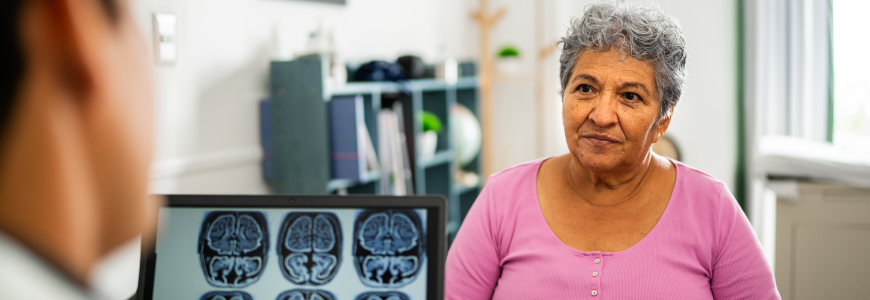
To meet the growing demand for neurology care in Wake County, Duke Health opened the Duke Neurology Cary clinic in August 2025. J. Daniel Bireley, MD, neurologist and neuromuscular disorder specialist, and Kristen Whitlock, MD, neurologist and multiple sclerosis (MS) specialist, provide advanced neurology care and diagnostic testing to patients with a wide range of neurological concerns and conditions, including:
- Amyotrophic Lateral Sclerosis (ALS)
- Chronic Inflammatory Demyelinating Polyneuropathy (CIDP)
- Lambert-Eaton Myasthenic Syndrome
- Migraine
- Myasthenia Gravis
- Myopathy/Myositis
- Multiple Sclerosis (MS)
- Neurology of Pregnancy
- Neuromuscular Disorders
- Neuromyelitis Optica
- Neurosarcoidosis
- Peripheral Neuropathy
- Seizures
- Stroke
- Transient Ischemic Attack
Neurologists Laura C. Wadi, MD, Timothy A. Collins, MD, and Vishal A. Mandge, MD, MPH, additionally rotate at the clinic weekly. The team also offers extensive diagnostic testing onsite, including electromyography (EMG), nerve conduction studies (NCS), neuromuscular ultrasound, and skin biopsies. “We’re providing a high level of expertise in clinical care and diagnostic testing that wasn’t as accessible to patients in western Wake County before our clinic opened,” says Bireley. “We’ve reduced wait times for patients to see a neurologist for simple pathology to very complex neurological disorders and made care more efficient and convenient.”
To refer a patient to Duke Neurology Cary, call 919-668-7600.
Multidisciplinary approach
Caring for patients with neurological diseases requires consideration of both the physical and psychological manifestations affecting patients and their families or caregivers. This holistic approach to patient care is central to Bireley’s practice. “Neurological conditions often involve close collaboration with other specialists and supportive services. At the Cary clinic, we have access to on-site experts in orthopaedics, occupational therapy (OT), physical therapy (PT), and headache specialists with procedural expertise. Headache specialists support patients with procedures such as local analgesia, anesthetic injections, and neuromuscular blocking agents. Additional specialty care is available through Duke Health locations in Durham and Raleigh, including psychiatry, speech-language pathology, surgery, clinical trials, and medical genetics.
“Because neurological conditions can affect a broad scope of patients and demographics, we treat and tailor our treatment plans to each patient’s needs and goals,” says Bireley. “Neurological complaints can be vague, such as sensory symptoms, headache, back pain, or fatigue, and sometimes dismissed. We are committed to listening to each patient, understanding their full experience, and personalizing a diagnostic workup that can tease out the underlying cause to help identify a viable treatment.”
Bireley states that it is an exciting time in neurology practice because more treatments are becoming available than ever before. One example is Bireley’s work with the Muscular Dystrophy Clinic in Durham, a collaboration with the Muscular Dystrophy Association. “This clinic offers a unique multidisciplinary approach to care for patients, where they can see neurologists, pulmonologists, PT, OT, and speech therapists in one visit. I can also serve as a segue to potential clinical trials at Duke, like the trial examining an effective treatment for inclusion body myositis.”
Referring providers can feel confident that their patients will receive expert care at Duke Neurology Cary, whether it’s an initial consultation, second opinion, or long-term care. “For some conditions, we haven’t had effective treatment options in the past, but we have access to more and more interventions that can delay progression, treat disease, manage symptoms, and improve functional quality of life. We’re happy to collaborate with other physicians to support the neurological care of their patients at any point.”