Call the referring provider team Monday through Friday from 8 a.m. to 4:30 p.m. at 866-385-3123 (866-DUKE-123). Providers may also email OncologyReferral@Duke.edu or fax 919-613-2316.
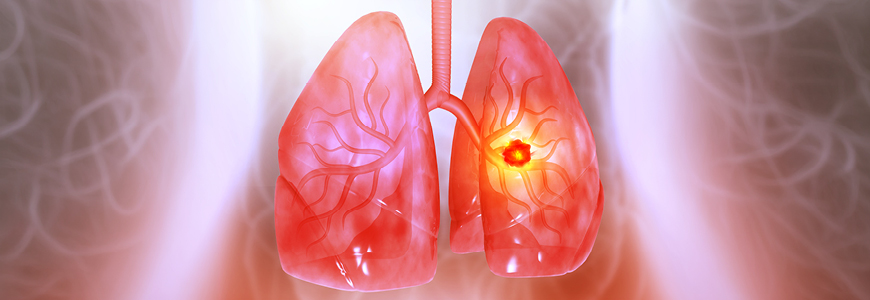
Duke Health is among the first centers in the United States to perform complex lung autotransplantation procedures to treat lung cancer, which can be a preferred alternative to standard pneumonectomy. Rather than permanently removing the entire lung, lung transplant and thoracic oncology surgeons Matthew G Hartwig, MD and Hiroshi Date, MD, PhD, perform a complex surgery in which the patient’s lung is removed, the tumor tissue is resected while outside of the chest cavity, and the healthy lung portion is then reimplanted.
“This is a true collaboration between our lung transplant, thoracic surgery, and oncology teams. The procedure benefits patients because it preserves much of the patient’s healthy, noncancerous lung,” Date says. “Recovery and long-term quality of life are better for patients when they retain more pulmonary function.”
Date previously performed 14 of these procedures in Japan, and Date and Hartwig have now completed three autotransplantation procedures together at Duke. “Patients with centrally located lung tumors can be strong candidates for this procedure because the distal lobes remain healthy and intact,” Date says. The surgeons work closely with Duke Cancer Institute thoracic medical oncologists to evaluate patients for autotransplantation candidacy, oftentimes done in collaboration with immunotherapy.
“For some patients with greater medical complexity, frailty, or other contraindications to pneumonectomy, autotransplantation can be a more tolerable and potentially curative option,” Hartwig says. “Autotransplantation allows for extended resection with better visualization and margin control, while avoiding the debilitating limits pneumonectomies can have on a patient’s activity and endurance,” he adds.
Complex procedure, unique collaboration
Duke Health has a rare combination of expertise in both lung transplantation and lung cancer resection. According to Hartwig, “Not many centers have this dual expertise. With Dr. Date bringing extensive experience in living-donor transplantation to Duke, it was natural to combine our skills and offer autotransplantation as an option for patients. It is an alternative to pneumonectomy and a curative procedure for some patients who previously would not have been surgical candidates.”
The surgical approach involves removing the lung from the chest cavity, flushing blood from the organ using cold preservation, resecting the tumor, and then returning the lung to the patient. Cold preservation reduces potential tissue injury and lowers the lung’s metabolic demands while it is outside of the body.
Successful autotransplantation procedures require additional resources, including anesthesia, nursing, and operative teams with specialized training and experience to support patients from preoperative preparation through postoperative recovery. “We have the equipment, resources, knowledge, and people to perform these procedures successfully, and that is unique,” Hartwig notes.
Tracking outcomes
“We are seeing better short-term recovery and surgical outcomes for patients undergoing autotransplantation compared with pneumonectomy,” Date says. “Because this is a newer procedure in the United States, we will closely monitor long-term outcomes.”
While autotransplantation can be curative, some patients may require additional cancer treatment. Hartwig explains, “Retaining more lung tissue improves long-term pulmonary function, which helps patients better tolerate adjuvant therapies such as chemotherapy or radiation after surgery." This may contribute to improved long-term oncologic outcomes.
Date concludes, “There is growing interest in autotransplantation among specialists in our field, and we look forward to sharing our experience and lessons learned." Date and Hartwig will present on autotransplantation at the American Association for Thoracic Surgery conference in May 2026.